.svg)
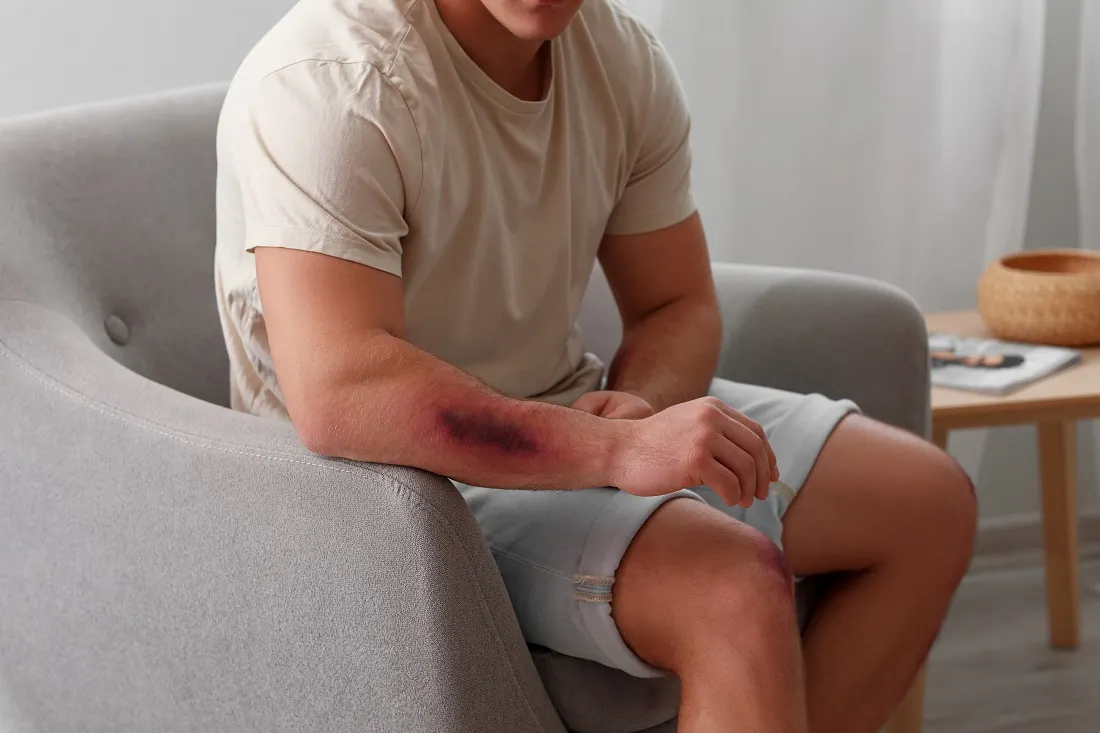
Property owners throughout New York have a legal responsibility to keep their spaces safe. When they fail, accident victims can face costly medical bills, lost wages, and life-altering injuries. Losses like these demand justice.
Premises liability lawsuits can be used to hold negligent property owners accountable when hazardous conditions on their property cause injury. New York premises liability lawyers approach these cases by seeking to show that the owner knew about the danger but failed to fix it, directly causing harm to lawful visitors.
What Makes a Premises Liability Lawsuit?
A premises liability lawsuit is a formal legal claim filed when someone gets injured on another person's property due to unsafe conditions arising from the property owner's negligence.
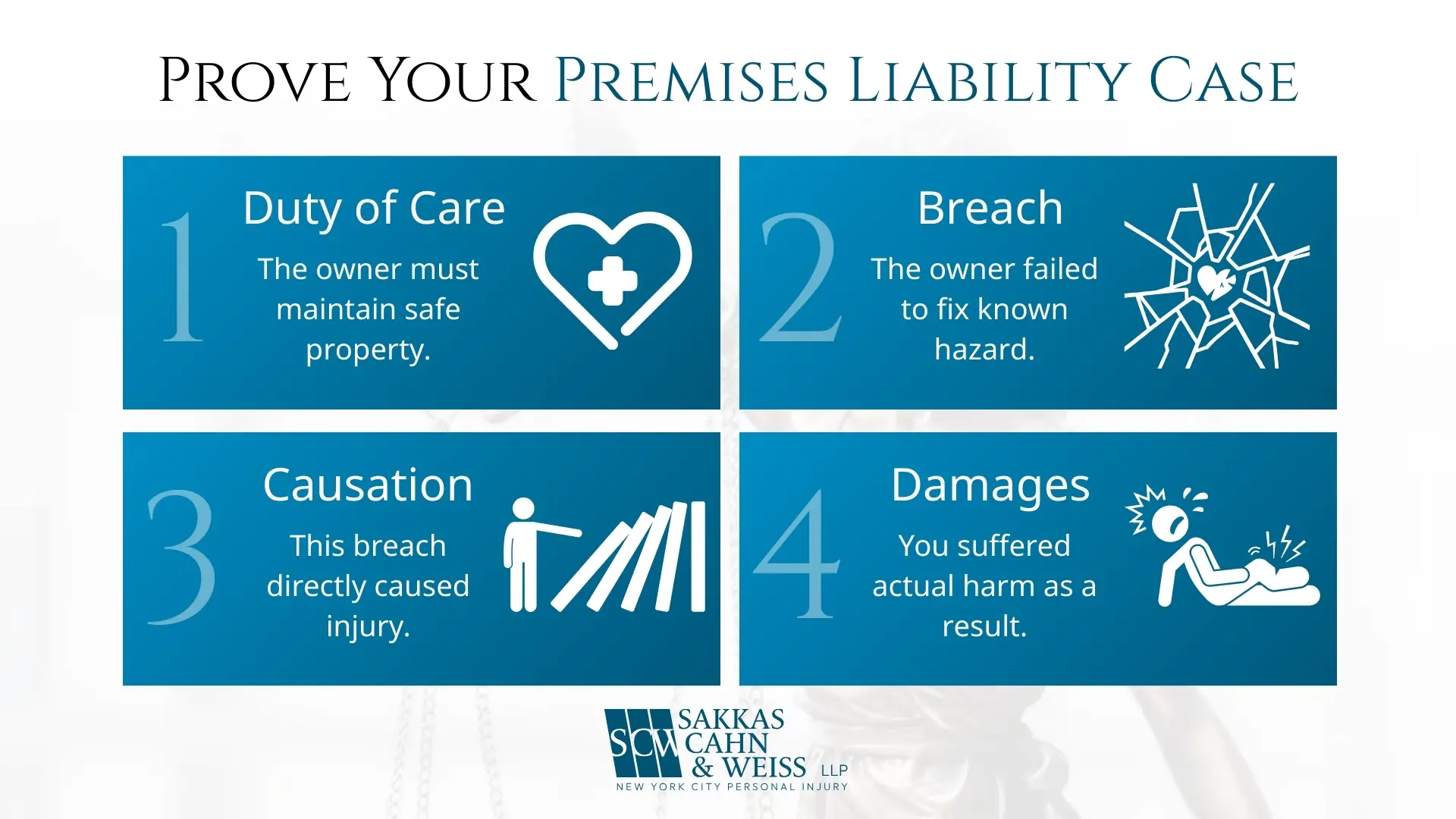
To win such a claim, you must prove the following elements:
- The property owner had a duty of care to keep their property safe.
- The property owner breached their duty by failing to fix or warn of a dangerous condition.
- The breach directly caused your injury.
- You suffered compensable harm as a result.
The law requires claimants to show that actual losses, such as medical expenses and lost wages, resulted from the incident.
Types of Premises Liability Claims
Dangerous property conditions can lead to a variety of legal claims in New York, each requiring specific evidence of negligence.
Slip and Fall Accidents
Slip and fall events are among the most frequent premises liability cases in New York.
According to data from the NYC Comptroller's Office, approximately 47,000 slip and fall accidents occur annually across New York City, with 16,800 emergency room visits stemming from falls and 2,100 serious injuries requiring extended hospitalization. These incidents account for approximately 38% of all premises liability claims.
Note: Property owners and managers must address wet floors, uneven surfaces, and broken pavement promptly to avoid liability. However, they often clean accident scenes quickly, destroying evidence before victims can document hazardous conditions.
Structural Failures
Ceiling collapses, balcony failures, and staircase accidents with broken steps or missing handrails can cause catastrophic injuries. Malfunctioning elevators and escalators also fall under the heading of structural failures, often stemming from deferred maintenance or code violations.
These cases typically involve multiple liable parties, including property owners, maintenance companies, and contractors.
Inadequate Security
Property owners must implement measures to protect visitors from foreseeable criminal acts. Inadequate security claims arise when assaults, robberies, or attacks occur in poorly lit areas, buildings without security cameras, or properties with known criminal activity where owners provide no protection.
The key to winning this type of claim is proving that the owner knew or should have known about the security risk.
Environmental Hazards
Threats like apartment fires, carbon monoxide poisoning, and toxic mold exposure demand proof that the property owner failed to maintain safe conditions. These cases often involve both premises liability and product liability when defective equipment contributes to harm. Building code violations can strengthen claims significantly.
Elements of a Premises Liability Case
For your lawsuit to succeed, you must establish four key legal elements:
These four elements form the foundation of every winning premises liability case.
Who Can Be Held Liable for Property Accidents?

Responsibility for mishaps sometimes extends beyond the property owner, depending on the property type and circumstances. Other potentially liable parties may include:
- Building managers: Must conduct regular inspections, address tenant complaints promptly, and ensure that common areas meet accepted safety standards.
- Commercial tenants: Face liability for conditions within their controlled space, like restaurants failing to clean spills quickly.
- Maintenance companies and contractors: Answer for negligent work that creates dangerous conditions or incomplete repairs that cause injuries.
- Government entities: Can be held responsible for hazards on public property, though special notice procedures apply in these cases.
Identifying all liable parties can help maximize your prospective compensation.
Steps to Take When You’re Injured on Someone's Property
When an accident occurs on someone else's property, the actions you take right away can protect both your health and your future legal claim.
By following these steps, you can ensure that your case stays on track and improve your chances of recovering fair compensation.
How Visitor Status Affects Your Case
New York law treats different categories of visitors differently, which has a direct influence on what duty the property owner owes you.
Invitees
These visitors receive the highest legal protection. Business customers, invited guests, and anyone entering with the owner's permission for mutual benefit qualify as invitees. Property owners and managers must actively inspect for hazards and either fix them or provide clear warnings.
Licensees
Licensees enter property with permission but for their own purposes, like door-to-door salespeople. Property owners must warn them of known dangers, but they don’t need to inspect for hidden hazards.
Trespassers
Property owners generally don’t have a duty to protect trespassers from harm. However, there are exceptions for children attracted by dangerous conditions (the attractive nuisance doctrine) and discovered trespassers once owners become aware of their presence.
Evidence Required to Win Your Claim

Strong premises liability cases are built on comprehensive documentation that proves each core element of negligence. Here’s what you’ll need for your case to succeed.
Accident Scene Documentation
Focus on taking photographs showing the dangerous condition, lighting, signage, and surrounding context from multiple angles.
Video footage from security cameras or nearby businesses can lend more support to your claim, while witness statements from people who saw the accident can provide essential corroboration.
Note: Property owners frequently rush to clean accident scenes, making immediate documentation vital.
Property Records
Relevant property-related records may include:
- Maintenance logs: Official maintenance records can reveal whether the property owner conducted reasonable inspections and when hazards should have been discovered.
- Complaint history: Prior repair requests or tenant complaints indicate that the owner had actual notice of the dangerous condition.
- Building inspections: Municipal code violations and inspection reports can offer proof that the owner failed to meet basic safety standards.
- Repair receipts: Invoices and receipts for structural or equipment repairs show what fixes were made, when, and whether they adequately addressed known hazards.
These sorts of records can make or break a premises liability case by establishing constructive or actual notice.
Medical Documentation
Emergency room records can tie the injuries directly to the incident, thereby establishing causation. Treatment records demonstrate injury progression and ongoing medical needs. Similarly, specialist evaluations and expert testimony can help substantiate permanent disabilities and future care requirements.
Complete medical documentation helps premises liability lawyers make concrete damage calculations, ensuring that injured clients get the compensation they truly deserve.
How Much Can You Get for a Premises Liability Claim?
In 2023, personal injury settlements in New York averaged $134,656, while serious slip and fall settlements averaged $126,000.
Settlement values can vary widely based on injury severity. Minor injuries may settle for a few thousand dollars, while catastrophic harm can be worth millions. The compensation recoverable in a personal injury lawsuit can generally be divided into two categories: economic and non-economic damages.
In general, compensation will reflect the severity of the injuries, the clarity of liability, and the managing attorney’s negotiation skills.
What If You're Partially at Fault?
New York's comparative negligence law allows you to recover compensation even when you share the blame for an accident.
Your compensation will be reduced in proportion to your assigned percentage of fault, but you’ll still be eligible to receive damages. For example, if you were awarded $100,000 following a car accident but were deemed 30% liable, you would receive $70,000.
Property owners and insurers often argue negligence on the plaintiff’s part to reduce payouts. They may claim that you weren't paying attention, wore inappropriate footwear, or should have noticed obvious hazards. A skilled personal injury attorney can counter these dishonest arguments by showing that the hazardous condition itself directly caused your injury.
How Long Does It Take to Settle a Premises Liability Case?
Like compensation values, settlement timelines typically come down to injury severity and liability clarity. Here are some general guidelines to keep in mind:
Note: Whereas New York gives injury victims three years to file most premises liability lawsuits, government claims come with a time limit of only 90 days.
Are Premises Liability Cases Hard to Win?

Premises liability cases present specific challenges that make them more complicated than other injury claims.
The central obstacle is proving that the property owner knew or should have known about the hazard that injured you. Unlike truck accidents or drunk-driving crashes, in which fault is typically obvious, premises liability cases require claimants to prove knowledge and opportunity to address the hazard.
Here are examples of a few challenges that could derail a premises liability lawsuit:
- Evidence destruction: The property owner may clean up the accident scene immediately, eliminating evidence of the dangerous condition.
- Witness problems: People who saw the accident or hazardous condition can disperse quickly, making it difficult to obtain statements.
- Surveillance gaps: Security footage frequently gets overwritten in a few short weeks, resulting in the loss of visual proof.
- Poor maintenance records: Logs may paint a picture of recent inspections that didn’t actually occur as documented.
The defendant’s attorneys may also attempt to shift the blame. They might argue that the condition was "open and obvious” and claim that a reasonable person would notice and avoid it. They might also question your presence, attentiveness, reaction speed, and other behaviors, similar to the kind of bias motorcycle accident victims often face.
With so many challenges arrayed against you, success demands immediate action and the assistance of a qualified premises liability lawyer.
Protect Your Rights — Start Your Claim Today
Property owner negligence can open the door to legal liability, but claimants must act quickly to assert their rights.
The proven personal injury lawyers at Sakkas, Cahn & Weiss, LLP, have recovered over $700 million for New York injury victims. With nearly a century of combined experience and direct partner involvement, we’ll fight for maximum compensation while you focus on healing. Best of all, you’ll pay us nothing unless we win your case.
Contact us today to take advantage of a free consultation.


Don't Let Critical Evidence Disappear
The experienced premises liability attorneys at Sakkas, Cahn & Weiss, LLP, can dispatch investigators immediately to secure video footage, locate witnesses, and document hazardous conditions. Contact us for a free case review.
%20(1).webp)