
 English
Free Consultation Available 24/7
EnglishFree Consultation Available 24/7
Won for Clients
of Combined Experience
Unless You Win
Handle Each Case
The skilled legal team at Sakkas, Cahn & Weiss, LLP, works to uphold the rights of injured construction workers throughout New York City, standing up to powerful construction companies and insurance carriers.
Our construction accident attorneys understand the complexities of New York labor law, OSHA regulations, and industrial codes that govern construction site safety. This knowledge allows us to identify violations that others might miss.
Decades of courtroom battles against major developers and contractors have shaped our approach to construction accident litigation. Drawing on close to a century of combined experience, our attorneys have recovered more than $700 million for clients through strategic case preparation and aggressive representation.
Each partner’s intimate knowledge of construction practices serves to ensure that no key detail of the legal process goes overlooked. Our multilingual team is accessible 24/7, offering the resources of a major firm while maintaining the personalized attention and support that set us apart in our field.
Construction remains one of New York City’s most dangerous industries, with accident rates exceeding national averages.
Recent data from the New York Committee for Occupational Safety and Health (NYCOSH) and NYC Buildings Construction Safety Report reveal that construction deaths account for 22% of all worker fatalities in New York City, compared to 21% nationwide.
This elevated risk reflects the unique challenges of building in America’s densest urban environment, where workers navigate extreme heights, heavy machinery, and complex site conditions daily.
Protect your rights today!
call us (212) 571-7171
New York City’s construction industry is considered to be one of the most dangerous in the United States. Building activities, combined with the city’s unique layout and ambitious vertical development, create numerous hazards for workers.
Our firm regularly handles cases involving:
Construction accidents often result in severe, life-altering injuries due to the treacherous nature of building work. When safety protocols fail, workers can face devastating consequences, such as:
The combination of heavy machinery, working at heights, and proximity to high-powered tools creates risks for traumatic injuries that can end careers and impact families for generations.
Recovering from a construction accident is about more than just healing physically — it’s about reclaiming your financial stability and protecting your future prospects. Here are the steps you’ll need to take to secure fair and adequate compensation for your worksite injury:
If possible, begin collecting evidence immediately after your accident, including photographs of the accident scene, unsafe conditions, and all visible injuries. Get the names and contact information of fellow workers who may have observed safety violations.
Also, hold onto any clothing, equipment, or materials involved in the accident and request copies of all accident reports and medical records. This official documentation will be essential for proving liability and substantiating your losses.
File a formal accident report with your employer, the site safety coordinator, and any relevant unions or safety committees. Make sure the incident is reported to OSHA if it meets the agency’s reporting criteria, and obtain copies of all filed reports.
Follow your employer’s accident-reporting procedures to the letter, but avoid signing any statements or releases without legal review. Proper reporting creates an official record of the incident and helps preserve your right to compensation.
It’s important to get a comprehensive medical evaluation, as even seemingly minor injuries could worsen over time. Follow all treatment recommendations and keep detailed records of medical appointments, prescribed medications, and therapy sessions. It’s also a good idea to take notes about how your injuries affect your daily life and work capabilities.
This type of medical documentation serves to establish the extent of your injuries and link them directly to the accident.
Finally, contact a qualified construction accident attorney before discussing the incident with the insurance companies or signing any documents.
Your lawyer will evaluate any claims you intend to make, including workers’ compensation and third-party liability suits. They’ll identify all responsible parties and develop strategies for maximizing your compensation while safeguarding your legal rights.
Understanding the interplay between workers’ compensation and construction accident lawsuits is the key to maximizing your recovery after a job site injury.
New York’s workers’ compensation system serves as an immediate safety net, delivering medical benefits and wage replacement after workplace accidents without requiring proof of fault.
For construction workers facing mounting bills and lost income, these benefits can provide crucial support during the initial recovery phase. However, the system’s predetermined limits rarely reflect the true cost of serious construction injuries, especially in cases involving permanent disabilities or specialized trade skills.
Beyond the basic protections of workers’ compensation, New York’s unique labor laws create opportunities for additional recovery through third-party lawsuits.
Construction projects typically involve numerous entities, including property owners, general contractors, subcontractors, equipment suppliers, and design professionals, each of which may bear liability under specific sections of the labor law.
Our focused approach often uncovers multiple responsible parties, from architects who fail to identify major safety hazards to suppliers who provide defective materials. By pursuing formal lawsuits alongside workers’ compensation claims, we consistently secure settlements that help offset the impacts of serious construction accidents.
New York has some of the nation’s strongest worker protection laws, particularly for construction workers. These laws establish clear responsibilities for property owners, general contractors, and subcontractors to maintain safe working conditions. Understanding them is vital for protecting your rights after a construction accident.
Recent court decisions have reinforced and expanded these protections, making them more relevant than ever for today’s construction workforce. Here are some of the most important regulations to be aware of:
This fundamental workplace safety statute establishes general obligations for maintaining safe working conditions. It requires property owners and contractors to provide reasonable protection to workers and visitors on construction sites.
The law covers everything from proper lighting and ventilation to safe equipment operation and hazard communication. Courts interpret this law broadly to ensure comprehensive worker protection, particularly in cases involving dangerous site conditions or equipment safety issues.
More commonly known as the “Scaffold Law,” this statute specifically addresses gravity-related risks in construction, mandating adequate protection for workers performing tasks at height, including appropriate safety equipment and proper scaffold construction.
The law establishes absolute liability for owners and contractors who fail to provide adequate fall protection, making it a powerful tool for injured workers seeking compensation. Recent interpretations have expanded coverage to include injuries from falling objects and various elevation-related hazards.
Section 241 of New York’s labor laws sets out specific safety requirements for construction, demolition, and excavation work. It incorporates detailed Industrial Code Rules applying to everything from personal protective equipment to power tool safety.
The law requires strict compliance with numerous safety regulations and creates liability for violations that cause injury. Courts have consistently upheld it, noting its importance in maintaining high safety standards on construction sites.
Construction accident claims in New York come with strict legal deadlines that vary depending on the type of claim and the parties involved.
For standard personal injury claims against private parties, injured workers generally have three years from the date of the accident to file a lawsuit. However, this timeline can be significantly shorter for claims involving government entities or public construction projects, where Notice of Claim requirements may give you just 90 days to initiate legal action.
The complexity of construction accidents means multiple parties are often involved, each of which may present different filing deadlines. For instance, workers’ compensation claims must be reported within 30 days of the accident, though some claims can be filed up to two years later if there’s good cause for delay.
Third-party liability claims, meanwhile, such as those against equipment manufacturers or subcontractors, may have different deadlines based on the nature of the claim and the jurisdiction. Missing these deadlines could cause you to permanently lose your right to seek compensation.
Construction accidents typically have far-reaching financial impacts beyond medical costs. From immediate emergency expenses to long-term career changes, these injuries often create hefty financial burdens that affect both workers and their families.
The costs associated with a construction injury may include:
Understanding the full scope of the potential expenses can help you seek compensation that truly reflects your losses.
At Sakkas, Cahn & Weiss, LLP, we understand that injured construction workers face considerable financial pressure during recovery. Our dedication to justice means removing monetary barriers that might prevent workers from exercising their rights.
We offer:
Concerns about money shouldn’t keep you from getting the legal assistance you need. When you work with Sakkas, Cahn & Weiss, LLP, they don’t have worry at all.
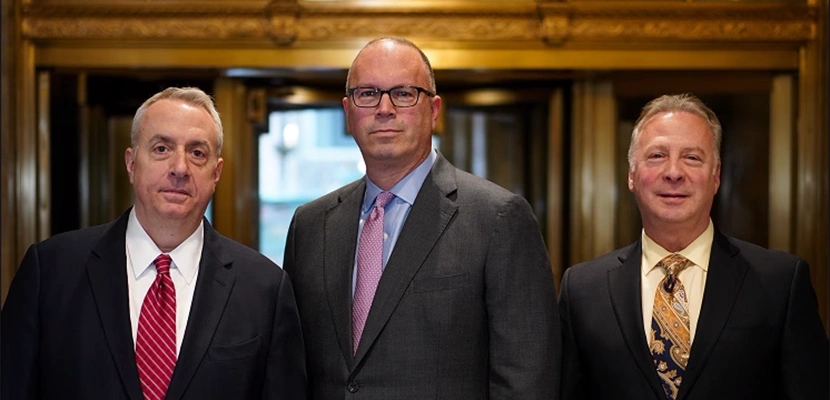
Construction accident cases demand both keen legal acumen and specific industry knowledge. Our capable team combines aggressive advocacy with a deep understanding of construction practices in New York, ensuring that every aspect of your case receives the attention it deserves.
From the initial investigation to the final resolution, we deploy proven strategies that consistently deliver results for injured workers.
We move quickly to document accident scenes, preserve crucial evidence, and interview witnesses before memories fade or evidence disappears.
Our team collaborates with industry-leading construction safety experts, engineers, and medical specialists to gather compelling evidence of safety violations and injury impacts.
We craft comprehensive legal strategies that anticipate the defense’s tactics and increase our clients’ recovery potential.
Our attorneys will handle all necessary communication and negotiation with insurance adjusters and the at-fault party’s defense lawyers to shield you from unscrupulous practices.
We can help coordinate medical care, complete benefits paperwork, and connect you with valuable support services throughout your recovery.
The attorneys at Sakkas, Cahn & Weiss, LLP, have built their careers on analyzing the technical aspects of construction litigation, from architectural specifications to OSHA violation patterns. Their depth of industry knowledge and extensive courtroom experience give them an unmatched ability to expose safety violations and prove liability.
Our clients consistently note our strengths, which include:
With decades of experience taking on construction industry giants, our formidable legal team brings precise insight and unwavering determination to every case.















You don’t have to go through this alone. Our team is here to listen, guide, and fight for you.
call us now(212) 571-7171
We’re here to support you and help you move forward with confidence. Share the details of your case with us, and we will evaluate your situation and outline your best path to success. Don’t wait—take the first step to compensation!

Fields Marked With An ”*” Are Required
"*" indicates required fields
call us (212) 571-7171
call us (973) 482-2122
call us (516) 747-7472
call us (203) 862-8699
Copyright © 2026 Sakkas Cahn & Weiss • All Rights Reserved. Disclaimer | Site Map | Privacy Policy. Digital Marketing By: 
*Images are obtained under license from Canva and other third-party stock image providers, with attribution included where required.