 English
Free Consultation Available 24/7
EnglishFree Consultation Available 24/7
Won for Clients
of Combined Experience
Unless You Win
Handle Each Case

Faulty machinery can crush, sever, or burn in an instant. The days after leave you with medical bills, missed paychecks, and no clear sense of who owes you money for what happened. Consulting an experienced Brooklyn construction accident lawyer can help you work through the legal steps after a serious job site injury.
A Brooklyn faulty machinery accident lawyer at Sakkas, Cahn & Weiss starts by tracking down each party connected to that machine, from the manufacturer to the site owner to whoever last serviced it.
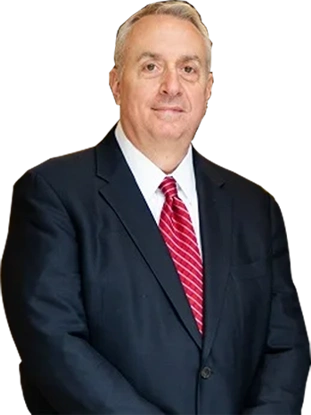
Attorney Matthew Sakkas spent his early career on the insurance-defense side of construction and premises cases, so he has seen firsthand how insurers try to shrink a claim before it ever reaches a courtroom. Reach out and let us take a first look at what happened before evidence disappears.
| SERVING INJURY VICTIMS SINCE 2008 | NY, NJ & CT PRACTICE | FREE CONSULTATIONS AVAILABLE |
|---|
call us now (212) 571-7171
A serious machinery injury rarely stays contained to one hospital bill. Lost wages pile up while you recover, future medical care can run for years, and a permanent injury can end the career you had before.
Compensation in these cases usually breaks down into a few categories, and each one adds up faster than people expect:
On a construction site, New York’s Scaffold Law can push that recovery even further. It holds property owners and contractors strictly liable when a fall from a height, or an object falling from above, causes an injury — even when the worker was partly at fault. This law is narrower than it sounds: it applies to height-related accidents, not to every kind of broken or unsafe machine (N.Y. Labor Law § 240). Outside a construction site, an ordinary negligence or product liability claim may apply instead.
Machinery breakdowns show up in more places than a construction site, and each type of failure points to a different party who may owe you money. We regularly handle injuries involving:
Once our faulty machinery accident injury attorneys know what broke, we work to preserve the machine itself, pull maintenance and inspection records, and bring in accident reconstruction experts as needed. That approach shapes how we build every faulty machinery claim from the first phone call forward.
Faulty machinery cases rarely come down to one party. The manufacturer that designed or built the machine can be liable if a defect caused the failure, whether that defect was in the design itself or showed up on the assembly line. The company that maintained or repaired the machine can be liable too, if a missed inspection or a sloppy repair job let a known problem slide.
On a construction site, the property owner and general contractor carry their own responsibility. New York’s Scaffold Law puts the duty to prevent height-related falls and falling-object accidents on them, and that duty does not disappear just because a subcontractor’s crew was operating the machine. Off a construction site, the same idea plays out differently. A warehouse owner who let a forklift run on worn brakes, or a factory that ignored a known electrical fault, can be held liable under ordinary negligence or product liability law.
More than one of these parties is often responsible for the same accident, and untangling that is exactly the kind of work a Brooklyn faulty machinery accident lawyer does before evidence gets lost or repaired away. We start by mapping out each company connected to the machine, from the factory floor where it was built to the last hand that serviced it, so no responsible party gets left out of your claim.
Adam D. Cahn secured an $11 million settlement during a products liability trial against a major automobile manufacturer. In a separate matter, Cahn obtained a $6.8 million settlement for a hospital worker who suffered severe neurological damage from lead poisoning caused by poor ventilation and faulty equipment.
Both cases turned on proving that defective equipment, not the injured worker, caused the harm. Prior results do not guarantee a similar outcome in any future case.
Nothing upfront. We handle these claims on a contingency basis, which means our fee comes out of the money we recover for you, and only if we win.
Often, yes. Workers’ compensation and a third-party lawsuit against a manufacturer, contractor, or property owner are separate systems, and pursuing one usually does not block the other.
That points toward a product liability claim against the manufacturer or maintenance company, in addition to any claim against the property owner or contractor who put it on site.
Generally three years from the date of the injury under CPLR § 214(5), though shorter deadlines can apply against government entities, so acting sooner protects your options.
Most Brooklyn personal injury lawsuits, including machinery injury claims, are filed and heard in the Kings County Supreme Court, Civil Term at 360 Adams Street in Downtown Brooklyn.
Depending on the facts, you may recover medical costs, lost wages, future earning capacity, and pain and suffering. Reach out to discuss what your specific injury may be worth.
Faulty machinery cases move fast once the responsible companies find out you’re hurt, and the machine, the maintenance logs, and the site itself can all change before you get answers. Sakkas, Cahn & Weiss offers free consultations and takes these cases on contingency, so there’s no upfront cost to find out where you stand.
Contact us today to talk through what happened and what your next step should be.











You don’t have to go through this alone. Our team is here to listen, guide, and fight for you.
call us now(212) 571-7171
We’re here to support you and help you move forward with confidence. Share the details of your case with us, and we will evaluate your situation and outline your best path to success. Don’t wait—take the first step to compensation!

Fields Marked With An ”*” Are Required
"*" indicates required fields
call us (212) 571-7171
call us (973) 482-2122
call us (516) 747-7472
call us (203) 862-8699
Copyright © 2026 Sakkas Cahn & Weiss • All Rights Reserved. Disclaimer | Site Map | Privacy Policy. Digital Marketing By: 
*Images are obtained under license from Canva and other third-party stock image providers, with attribution included where required.