


Mar 09, 2026
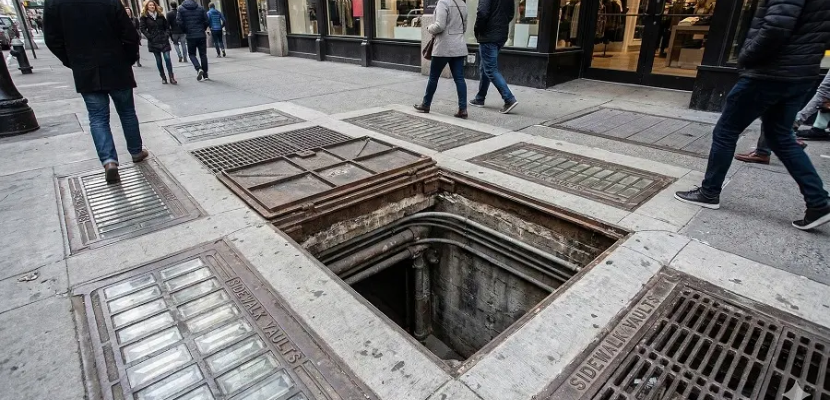
Sidewalk vaults are embedded beneath many sidewalks in New York City, especially in Manhattan and in older commercial corridors. What appears to be solid pavement may conceal hollow space beneath, supported by aging materials and structural components built generations ago. These vaults reflect the city’s architectural past, but they also create modern safety hazards for pedestrians.
At Sakkas, Cahn & Weiss, LLP, our New York City premises liability attorneys represent individuals injured by dangerous property conditions across NY. Among those risks are sidewalk vault collapses and failures that lead to serious injuries.
What Is a Sidewalk Vault — and Why Are They Still Here
Sidewalk vaults are underground spaces located beneath the public sidewalk and adjacent to buildings. Historically, they were constructed to expand usable space for storage, mechanical systems, coal delivery, or access to basement levels. In many older buildings across Manhattan and other boroughs, vaults remain in place today.
Under New York City Administrative Code § 19-101, a vault is defined as a structure extending beneath a sidewalk and used for building-related purposes:
These structures are often covered by:
- Concrete slabs
- Steel plates
- Vault lights (glass block panels designed to transmit light into the basement below)
Vault lights were once common architectural features. Over time, however, materials deteriorate. Metal corrodes. Concrete cracks. Waterproofing fails. Ground conditions shift.
Many New Yorkers walk daily across sidewalks that conceal hollow space underneath. In high-traffic areas near transportation hubs, commercial buildings, and construction sites, stress on these structures increases.
What Conditions Make a Sidewalk Vault Dangerous — Even If It Looks Normal
Sidewalk vaults can appear stable from above. The surface may show no obvious warning signs. Yet structural failure can occur due to hidden deterioration.
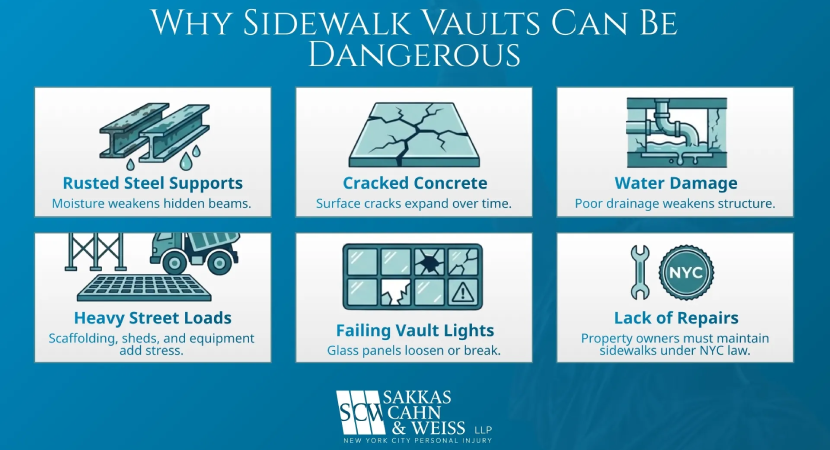
1. Corrosion of Steel Supports
Many vaults rely on steel beams to support the concrete slab above. Exposure to moisture over decades can weaken these supports. Rust compromises load-bearing capacity.
2. Cracked or Spalled Concrete
Concrete slabs covering vaults may develop cracks due to weather cycles, traffic vibrations, or heavy equipment used during nearby construction. Over time, small cracks expand.
3. Water Infiltration
Improper drainage allows water to collect in the vault space underneath. Freeze-thaw cycles weaken structural components.
4. Overloading from Street Activity
NYC sidewalks are not limited to pedestrian traffic. Equipment, scaffolding, sidewalk sheds, and construction materials are often placed temporarily above vault areas. Excess weight can increase stress.
5. Vault Lights Deterioration
Glass block vault lights were designed to transmit light into basements. When framing systems corrode, panels loosen or fracture. Pedestrians can fall through or sustain injuries from broken glass and debris.
6. Neglected Repairs
Administrative Code § 7-210 places responsibility for maintenance on property owners of non-exempt buildings. Failure to maintain a safe sidewalk condition may expose building owners to liability when injuries occur.
Questions of structural collapse often overlap with broader issues of liability for pedestrian accident injuries in NYC. Injuries caused by vault collapse can include fractures, brain trauma, spinal cord injuries, or, in severe cases, death.
Who Is Typically Responsible When a Vault Collapses
Liability depends on ownership, control, and statutory duty.
Under New York City Administrative Code § 7-210, property owners are generally responsible for maintaining sidewalks adjacent to their buildings in a reasonably safe condition:
If a sidewalk vault sits beneath the sidewalk next to a building, the building owner is often legally responsible for repairs and structural integrity.
Other potentially responsible parties may include:
- Contractors, if recent construction or repairs affected the vault
- Commercial tenants, if the lease terms assign maintenance duties
- In limited circumstances, the City, depending on control or permit involvement
Sidewalk vault failures often fall under premises liability cases in NYC, where property owners may be legally responsible. Courts evaluate liability using principles similar to those applied in NYC slip and fall injury settlement factors, including notice, maintenance history, and control of the property.
How Do You Prove a Property Owner Knew the Vault Was Deteriorating
To recover compensation, an injured person must show the owner either created the dangerous condition or had actual or constructive notice of it.
Constructive notice exists when a defect has been present long enough for the owner to have discovered and repaired it.
Evidence may include:
- Prior NYC DOT or DOB violations
- Maintenance and inspection records
- Tenant or public complaints
- Photographs showing visible cracks or sagging
- Engineering reports identifying long-term corrosion
Evidence like witness testimony and expert findings often leads to a deposition in a personal injury case, where parties clarify what the property owner knew before the collapse.
What Should Someone Do After a Sidewalk Vault Accident
An accident scene involving a collapsed vault can be chaotic. Construction debris, concrete fragments, and emergency responders may quickly alter the area. Taking structured steps helps preserve evidence.
Step 1: Seek Medical Attention
Serious injuries may not appear immediately. Document all medical treatment and follow-up appointments.
Step 2: Report the Incident
Report the accident to building management, the property owner, or the appropriate city department. Obtain a copy of any incident report.
Step 3: Photograph the Location
If possible, capture images of the sidewalk, the vault opening, the surrounding conditions, and any nearby scaffolding or sidewalk shed.
Step 4: Identify Witnesses
Collect names and contact details of pedestrians, construction workers, or tenants who observed the collapse.
Step 5: Preserve Clothing and Footwear
Damaged items may demonstrate the force or mechanism of the fall.
Step 6: Avoid Speaking with Insurance Representatives Without Counsel
Insurance carriers may contact injured individuals quickly. Statements can later be used in disputes.
Step 7: Consult an Attorney
A free initial consultation can help assess whether legal action may allow you to seek compensation for medical expenses, lost income, and other damages.
Time limits apply under New York’s statute of limitations for personal injury claims. Many injured individuals are concerned about legal costs, but learning how no-win no-fee works with lawyers can clarify that compensation claims do not require upfront payment.
Protecting Pedestrians from Hidden Sidewalk Dangers
Property owners are typically responsible for maintaining safe sidewalk conditions under New York law. When injuries result from vault failure, the investigation focuses on notice, maintenance history, and structural integrity.
At Sakkas, Cahn & Weiss, LLP, our attorneys represent individuals injured by dangerous property conditions throughout New York City. If you or a loved one was hurt in a sidewalk vault collapse or related accident, contact our firm to discuss your rights and possible compensation.